The Practical Five: Week 24
Five ideas from AI and product design you can apply by Monday

The Thursday companion to my Tuesday deep dives.
🔬 Research worth using. One finding you can apply, not just nod at.
🤖 AI this week. The signal, not the noise.
🔄 What changed. A product or UX move worth stealing.
📌 Worth remembering. An old idea that explains today.
👀 One more thing. A tool, a take, or something odd I couldn’t drop.
🔬 73% of buyers trust peers more than your product page.
A new B2B buyer-journey report found that 73% of buyers say peer recommendations are their most trusted source when researching vendors. They’re forming opinions about you in rooms you don’t control: Reddit threads, group chats, screenshots.
So the real UX question isn’t “how does my UI look in isolation.” It’s “how easy am I to talk about, quote, and screenshot somewhere like Reddit.”
Use this: audit how your product travels. Can someone copy a sharp line, grab a clean screenshot, or explain you to a stranger in one sentence? If not, that’s the work.
Read the report: Reddit’s hidden B2B buyer journey
🤖 You can hand Claude a video and get the animation back.
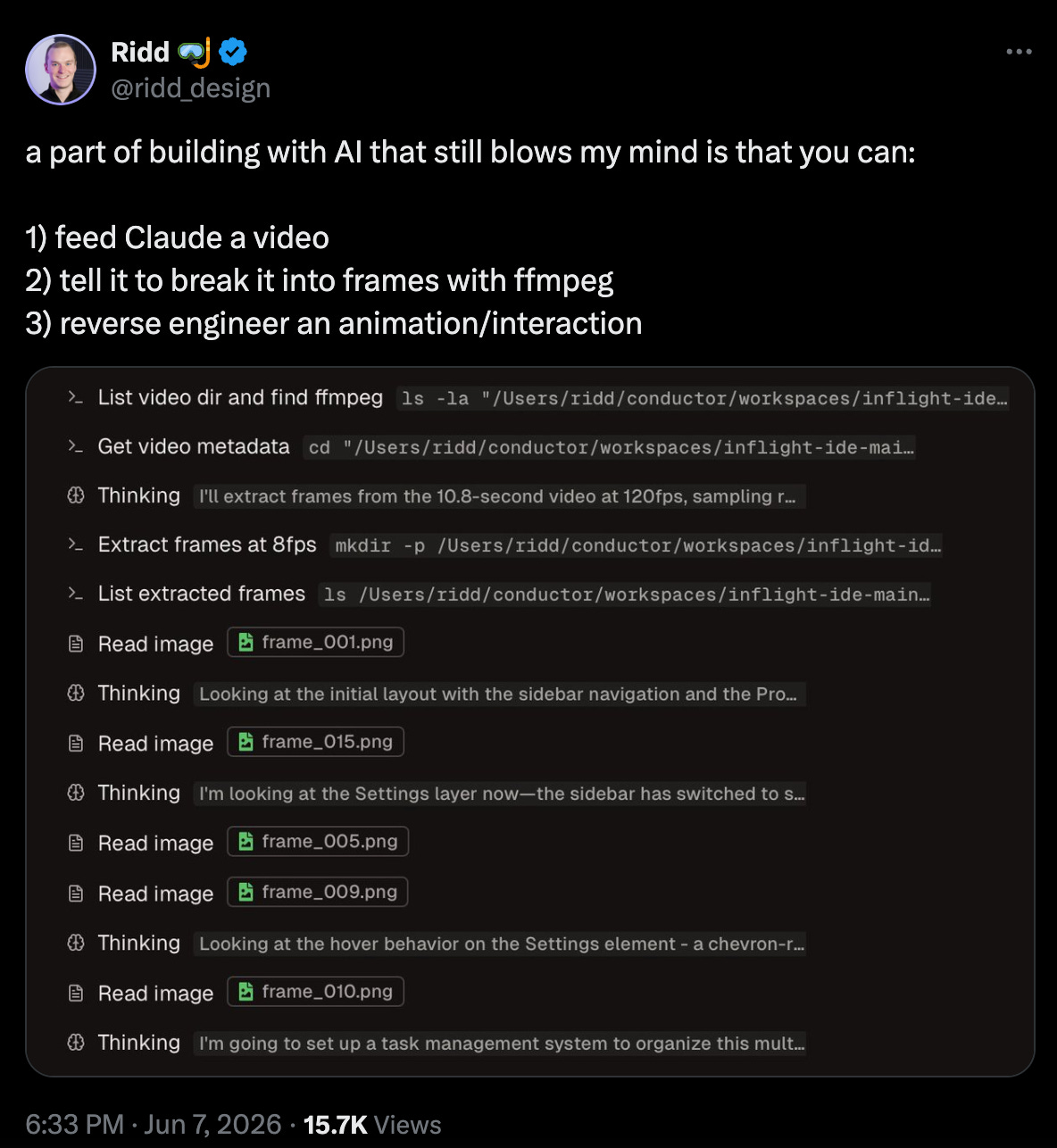
Ridd (@ridd_design) showed a trick that’s deceptively simple. Feed Claude a video of an interaction. Tell it to split the clip into frames with ffmpeg. Then have it read the frames and reverse-engineer the animation.
In his run, Claude pulled frames at 8fps from a 10.8-second clip, studied the sidebar, the settings layer, the hover states, and rebuilt the interaction step by step.
The shift: a video stops being something you eyeball and becomes source material Claude can take apart.
Use this: next time you want to copy a slick micro-interaction, screen-record it, hand Claude the file, and ask it to extract frames and reconstruct the motion. You go from “I like that animation” to a working version without guessing the timing.
🔄 Figma will now QA your design system for you.
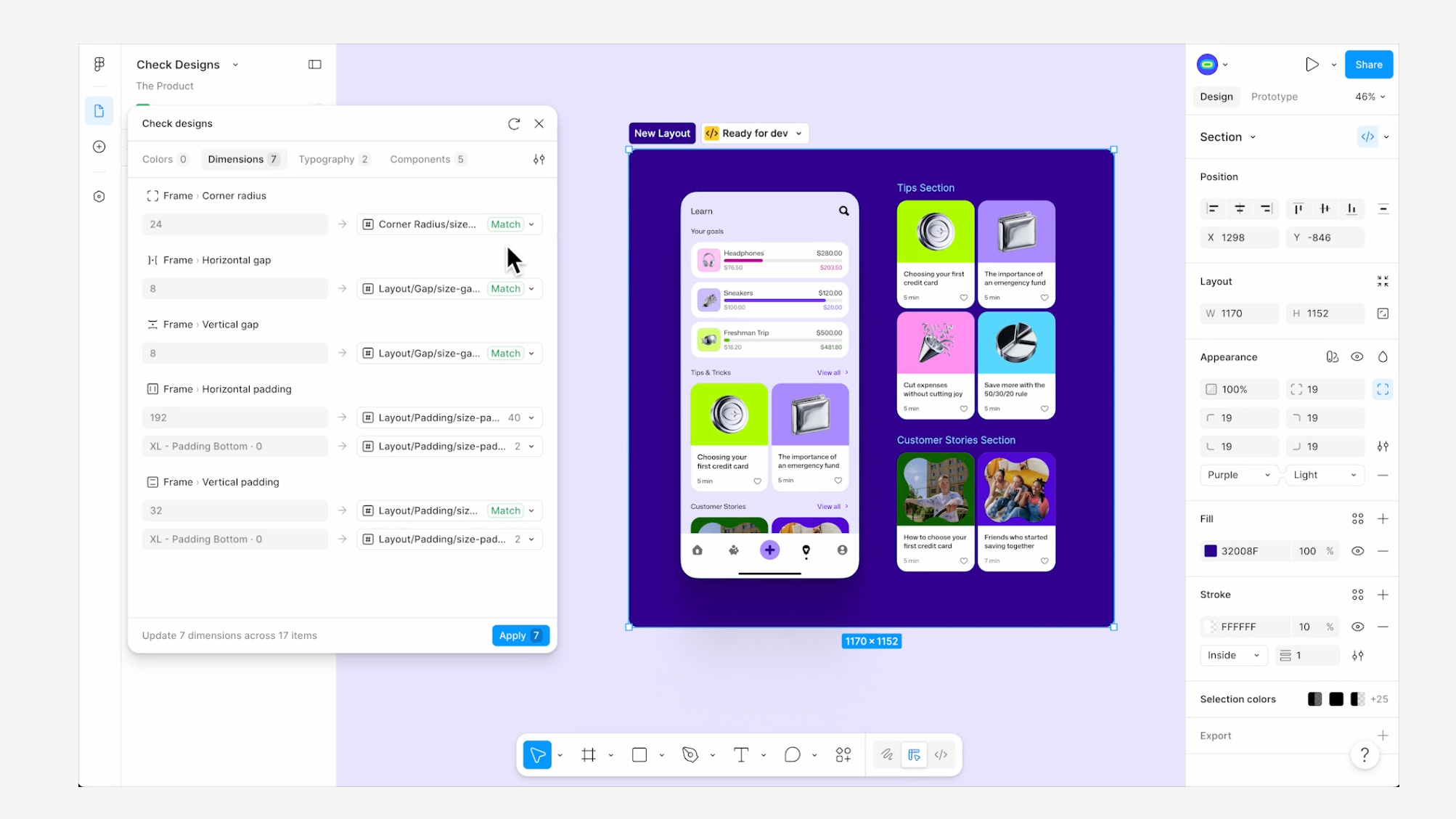
Figma shipped Check designs. It compares your file against your design system, flags what’s off, and suggests the fix in one click.
What it catches: hard-coded color, text, radius, and spacing values it swaps for the right token. Contrast violations it replaces with WCAG AA or AAA colors. Tokens and components from unsubscribed libraries. Components detached from their source.
What changed: design-system QA is turning into a background process, not a manual ritual at handoff.
Steal this: run it as a pass before handoff, so you catch drift while it’s still cheap to fix. (Organization and Enterprise plans.)
📌 First-principles founders don’t copy. They rethink.
The old move that still explains today’s winners: instead of asking “how does everyone else do this,” they asked “why is it done this way at all,” then rebuilt from zero.
Lemonade: normal insurers profit by denying claims. Lemonade takes a flat fee and gives the leftover to charity. No reason to fight you.
OnlyFans: every platform banned adult creators. OnlyFans let them in and paid 80%.
Revolut: banks milked currency-exchange fees. Revolut made it nearly free and let the product sell itself.
Use this: pick the most annoying “that’s just how it works” rule in your industry. Ask why it exists. If the only honest answer is “tradition,” that’s your opening.
👀 A GitHub profile rendered as a pixel-art city.

Samuel Rizzon built GitCity, a 3D city that turns GitHub profiles into buildings. Built with Claude Code in a single day. Two months later: 80,000 buildings, 180,000 visitors, 5M+ social views, 5,000 GitHub stars.
It didn’t go viral by luck. He engineered the loops in: a one-click “share on X” on every action, a cinematic skyline opening, and buildings that can “attack” others, which fires an email pulling the target back in to retaliate.
Steal this: don’t bolt sharing on at the end. Make the share the action itself, and give people a reason to walk back into the core loop.