The Practical Five: Week 30
Five ideas from AI and product design you can apply by Monday

🔬 Research worth using. One finding you can apply, not just nod at.
🤖 AI this week. The signal, not the noise.
🔄 What changed. A product or UX move worth stealing.
📌 Worth remembering. An old idea that explains today.
👀 One more thing. A tool, a take, or something odd I couldn’t drop.
🔬 Most founders pick the wrong marketing channels. The data shows what actually works.
Marc Lou pulled numbers from 1,162 startups and ranked where the revenue actually shows up. The top of the list:
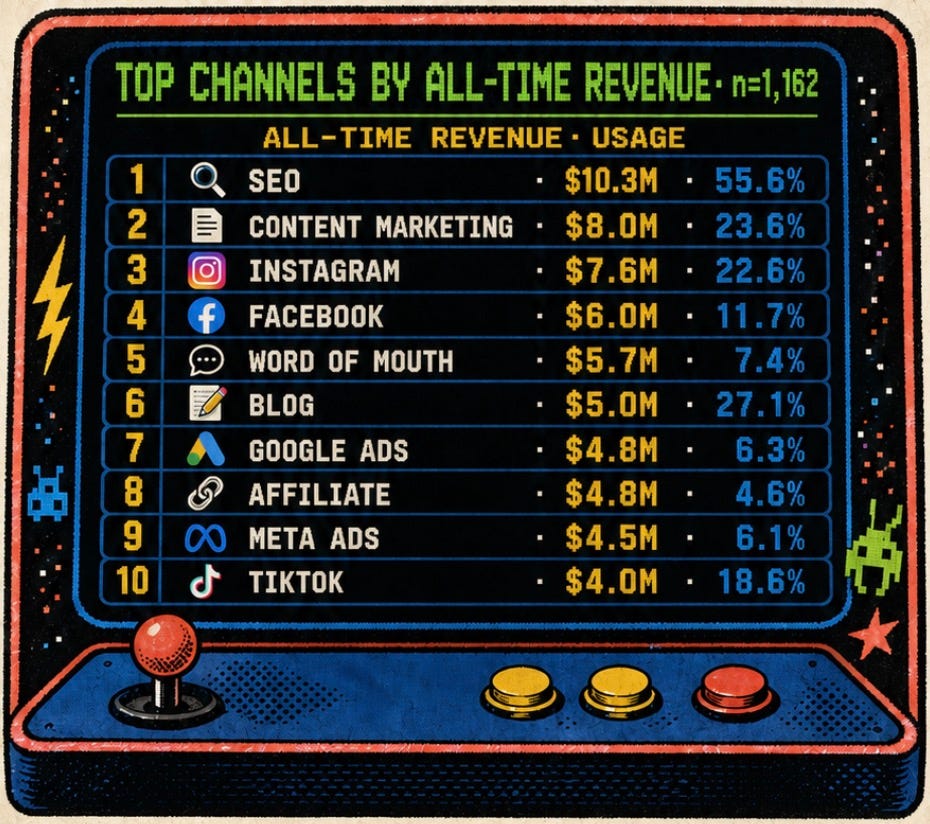
What jumped out at me is what isn’t up there. Paid ads sit lower than most founders would guess, and the channels doing the heavy lifting are the slow ones. The stuff that keeps sending you traffic months after you hit publish.
So if you’re deciding where the next 90 days go, pick one owned channel and go deep before you open a single ad account. The startups near the top of this list didn’t buy an audience. They built one, slowly, and let it compound.
🤖 The hottest job in AI isn’t “prompt engineer.” It’s the person who ships the agent.
Greg Isenberg made the case this week that the Forward Deployed Engineer is about to be the role everyone wants, and he laid out a rough 30-day path to becoming one.
Week one is just building: one agent, one task, working end to end. Week two is survival, which mostly means swapping freeform text for strict schemas and planning for the thousand ways it breaks. Week three you make it measurable with retries, evals, and a golden dataset. Week four you learn to sell it, so you actually understand the pain, the architecture, and the economics well enough to pitch a business.
The line I keep coming back to: “There’s only one way something goes right. A thousand ways it goes wrong.”
Strip away the hype and the signal is simple. The skill that pays isn’t calling a model. It’s making the thing reliable enough that someone will trust it with real work.
🔄 Coca-Cola rebranded this week. It flopped in public.
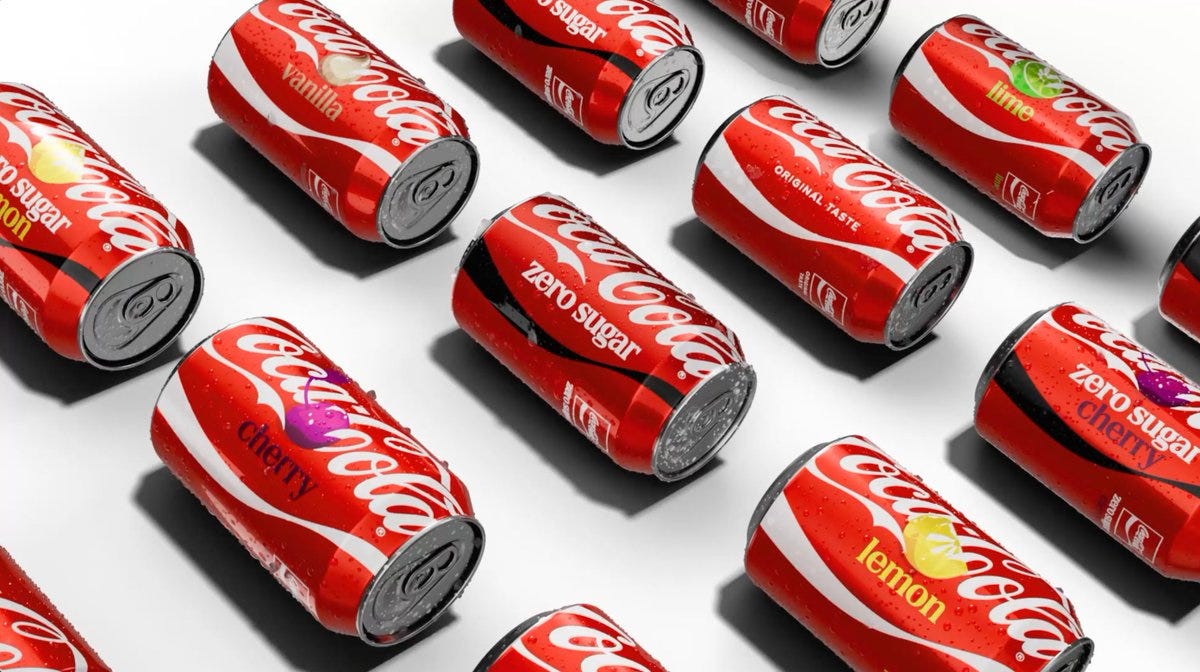
Marc Lou said what a lot of people were quietly thinking: “You can just ask 10 random friends and 50% will tell you the font looks like a cigarette brand. So how?” He’s not wrong. The new identity reads more Marlboro than Coca-Cola.

That’s the whole lesson, really. A company worth hundreds of billions shipped a look that any hallway test would have caught in an afternoon. They had the budget to ask a hundred strangers and clearly didn’t bother asking ten.
Before you ship your own logo, name, or redesign, show it to a few people who don’t work with you and ask one question: what does this remind you of? The answer you’re dreading is usually the one worth paying for.
📌 The specialist had a good run. The generalist is back.
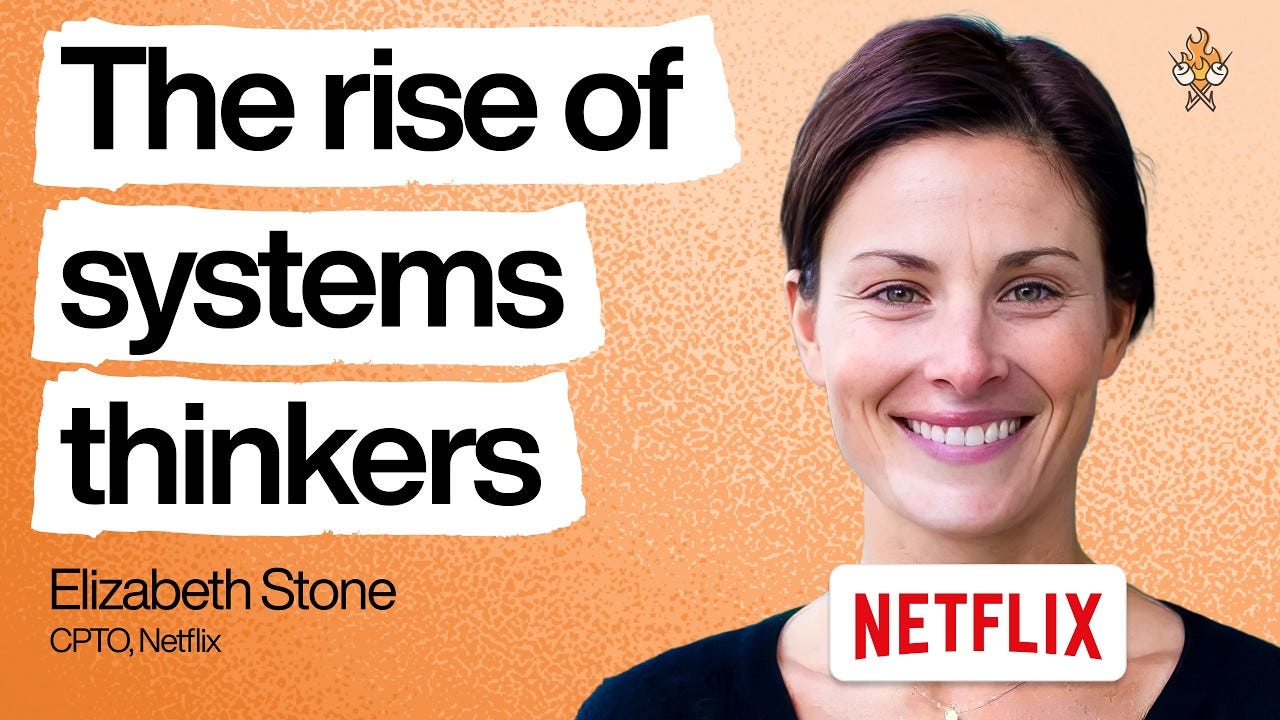
On Lenny’s podcast, Netflix’s CPTO Elizabeth Stone put it plainly: “The days of very narrow deep specialization feel limited to me… compared to 5–10 years ago, we’ll have fewer specialists and more generalists.”
None of this is new, which is sort of the point. It’s the old T-shaped person idea from a decade ago, just wearing 2026 clothes. What changed is that AI quietly made “good enough” cheap inside every specialty. So the scarce skill now isn’t depth in one lane. It’s being the person who can move across three of them and actually see how they connect.
Depth still counts. But range is the part AI can’t hand you for free yet.
👀 Everyone’s racing to use AI faster. The people using it best are slowing down.
Riley Brown watched a wave of founders throwing agents, skills, and workflows at everything in sight, and noticed the ones actually winning were doing the opposite. His take: “The focus should be on solving problems, not the tools.”
It stuck with me because speed aimed at the wrong problem is just faster waste. Next time you reach for an agent, ask the boring question you’d have asked before any of this existed. Is this problem even worth solving?
✨ Creator worth a follow: Mia Kiraki (@miakiraki)
Most AI writing tells you which tool to use. Mia writes about the part nobody really covers: how to create with AI without your work quietly turning into everyone else’s. Her newsletter, Robots Ate My Homework, is basically a running argument for building alongside AI without becoming, in her words, “another robot in the circus.” Good follow if you’re in these tools every day but still want your writing to sound like you wrote it.
📡 Built with SnapFast.
Keeping up with the people worth following used to cost me an hour of scrolling a day, and I still missed their best stuff. SnapFast fixes that: it watches the creators you follow and hands you only their top posts, so your feed becomes signal instead of a time sink. It’s how this whole issue came together in minutes. Free for now: snapfast.ai